Tuesday, September 17, 2019

The MVC-ETL Pattern

Nothing's too easy in software development when you haven't done it for a while or don't really have a dev plan.  Hours can be wasted setting up the tools, prototyping and testing.  A friend of mine has been asking me recently how to use MVC for his project.  Last night I spent some time with him and realized that his problem was not just understanding and using MVC, it was also that his data was not ready.  So where to begin?

ETL

When we have a data-driven app, we really have just two options: 1) build forms and code to store our data in exactly the shape we're going to use it or 2) use ETL (Extract, Transform, Load) tools and techniques to shape our data into the necessary output formats.

The popular visual, gui-based ETL tools that I know of in wide use today are Alteryx, Tableau Prep Builder and Microsoft SSIS.  There are many more.  ETL tools (this could be code like C#, Python, R, etc. but here I'm only talking about visual tools that to me are more approachable and usable) are used to connect to data sources (extract), twist and turn the data into the shapes and outputs you want (transform) and save them off for access later (load).

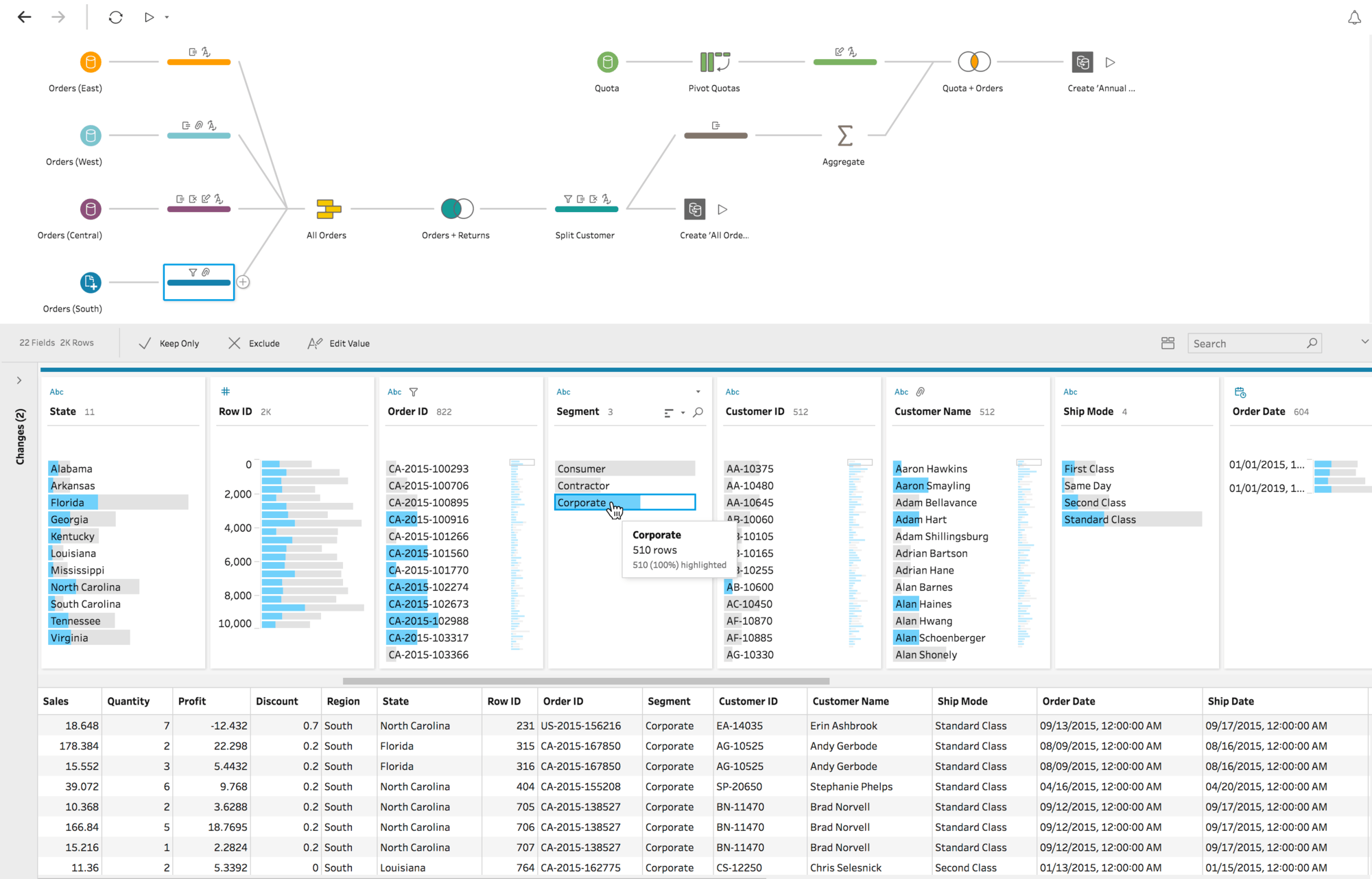
Image result for tableau prep flow
The Tableau Prep Builder user interface that in the top pane, left side, we connect to some data, twist and turn it into our output shapes, join it and all that visually, then finally output it to a final source.

MVC

MVC is the Model View Controller software pattern.  There are many frameworks that implement this pattern.  My favorite is Microsoft ASP.NET MVC, which I have been using since 2009.  Something that goes really well with MVC in ASP.NET is Entity Framework, which makes it easy to connect to and work with data in a language like C#.  Another powerful aspect of the .NET Framework is LINQ to SQL which makes it easy to work with data within code. 

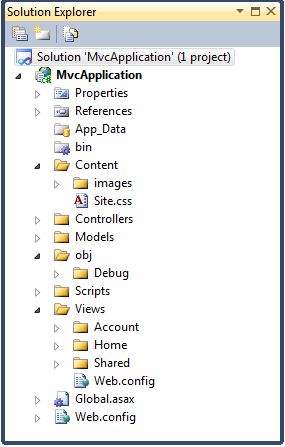
Image result for asp.net mvc folders
What the folder structure of an ASP.NET MVC web application looks like.  Note that there are folders for the Models, Views and Controllers.  This makes it easier for developers to separate and utilize these three aspects.

The Model in MVC is the database, and perhaps the one we created above in ETL.  There may be additional database tables we need to use and all the "logic" of the data and its shape and form live within this module.

The Controllers in MVC are those things that help us get and put the data.  From controllers, we connect to, work with, surface and store data.  Some transformations can take place here but for the purposes of this article, I am handling all the "heavy lifting" data transformations in the ETL flow described above.  The benefits of this approach are the we can separate our concerns between MVC which is great for making software applications and ETL, which is great for turning data into the shapes we need for our apps.

The Views in MVC are the actual screens that users see and interact with.  Screens can be created for viewing or entering data.  The views might have ViewModels that go into them that make it easy for the logic of the view to present the data to the user.


MVC and ETL Together: PB&J

By combining the power of MVC to make applications with the power of ETL to turn your data into easily-usable shapes, developers today can expand their reach, improve the quality of their apps and time to market.

Wednesday, July 31, 2019

Is Subscription Pricing Fair?

Image result for pricing

Is subscription pricing fair to those involved? Who typically wins and who typically loses in these schemes, the seller or the buyer? 

Subscription is defined as:

"the action of making or agreeing to make an advance payment in order to receive or participate in something."  It should also be added that subscriptions typically happen on a recurring basis.

Modern subscription pricing models give discounts for longer commitments where paying and renewing per-month, for example, is more expensive than paying or renewing on an annual basis.

What is driving buyers (businesses as well as consumers!) to decide to pay for a subscription?  Sometimes it's the only option available.  Some of it can also be explained by FOMO (Fear of Missing Out).  The opposite scenario, would be grandpa Murray's saying, "Tell me what you need and I'll tell you how you can get along without it."

Here is what is driving the move to subscriptions:
  1. Limited choice. This affects both seller and buyer.  Barry Schwarz has been absorbed, but the result is sometimes perversion of the intent.
    1. Seller – Offer buyer fewer choices to make the sale faster, train sales people on “value” of having all options available
    2. Buyer – Less to think about
  2. Don’t need to worry about a varying usage pattern.  Big decisions up front (sports or not in package), but then it doesn’t matter if there is a sleep over.  At a business level, I may not be using a specific feature now, but it’s expensive to add.
  3. Aspirational.  If I pay for the gym I’m more likely to guilt myself into using it.  If I buy a media subscription, I may come back to read it later, and I know it’s much more expensive to buy single copies.
  4. FOMO.  Perhaps.  Water cooler talk about a new show?

We further dissect the elements of subscriptions:

Ease. The ease or simplicity of subscription pricing can be quite disturbing: in a 'set it and forget it' fashion, consumers basically sign up for services that they may never use and grant an annuity payment to the seller if their subscriptions go unmanaged.  It's interesting to wonder how many subscriptions people have versus those that are actually used.  The difference represents waste and likely profit for the seller.

Popularity.  Subscriptions likely take up an increasingly large mix of consumers' market baskets.  This perhaps relates to the previous concept and the perception of abundance: and it is generational to some extent. Taking care of the pennies and the dollars will take care of themselves has been replaced by “it’s only $25 per month” and buyers forget how much all the $25 adds up.

Partiality.  Rather than paying for the entire value of the item up front, in subscription pricing, it is like leasing or renting: it creates a price that may seem more affordable or attractive to the consumer and makes the buying decision easier.

Waste on the Consumer End.  There can be waste for consumers of subscriptions: we sign up and don't use them. Magazines arrive, for example, accumulate and don't get consumed. Subscriptions if used well directly align supply and demand but when the buyer does not make full use of the subscription and its benefits, there is misalignment and therefore waste; the system can be inefficient.

Waste on the Seller End. There are also examples of waste where the company gets the model wrong and loses: a recent example of this was MoviePass who offered for $9.99 nearly unlimited access to movie theaters.  The company quite famously experienced major challenges with this model and folded badly.  Fast followers and larger, more established organizations like AMC quickly swooped in on the opportunity and figured out a set of economics that could more sustainably provide a subscription service to this market.

Returns.  When there is waste it may be the duty of the seller to both detect and re-adjust the subscription plan to better fit the usage pattern of the user. An example of this is cell phone carriers who are willing to recommend a better plan based on the observed usage of the service by the user.  Consumers will expect and want more of this kind of governance and value.

Options and Complexity.  Another common example of waste in subscription models and a "good thing" for sellers are gym memberships: consumers keep paying regardless of use.  Gyms would perhaps be delighted if their members never showed up as long as the revenue stream kept flowing.

Option Time Frames.  Options can be offered in both "pre-facto" and "post-facto" contexts.  For example, in the pre-facto sense, consumers can choose whether or not too add cheese to their burger. This is a competitive differentiator for some: have it your way vs. limiting options by policy because the seller knows what their consumers like.  An example of a post-facto (after the purchase) option would be returning the burger for a full refund if unsatisfied.  A better example, related to subscription, is a refund for unused services or carry forward minutes, as it were.  Carry-forward is not necessarily in the buyer’s interest if they aren’t going to binge to catch up.  This also happens in employment scenarios when employees accumulate "sick days" that expire at the end of the year.  Have an inexpensive service where what the consumer pays seems worth the price, but it's messed up if it's only used as a small fraction of the number of available annual uses.

Increasing Complexity.  It is likely that pricing models will only increase in terms of their complexity over time and this will lead to increased confusion and dissatisfaction of consumers.  End-User License Agreements (EULAs) of software, for example, are notorious for their complexity and consumers are known to just skip over them rather than understanding the language and implications of their engagement with the offering.  Consumers are likely to get tired and "don't have time to do a spreadsheet every time they are going to buy something." There used to be a place for consultants between business buyers and vendors – interpreting what the prospect really needs.  Computers are driving this innovation and ability to deliver more complex mechanisms successfully.

Overwhelm.  In Barry Schwartz's The Paradox of Choice it is argued persuasively that not everyone needs or wants more choice and at some point the buyer becomes overwhelmed with options and relies on gut, emotion, bias or instinct to decide.  From an engineering and innovation perspective more options,  bells and whistles are valuable but it is the job of the marketer or product manger to bundle and package only these innovations into bite size chunks that the end users will actually use, consume and from which they will, at scale, actually receive value and benefit.

Base Plus and Hybrid Models.  Some new pricing models start with the base service and then offer add-ons or subscriptions on top of the base capability.  These can be thought of as hybrid models with fixed and variable expenses.  As if lots of features and pricing models were not enough to confuse the consumers, "modes" and options of features (like colors) add yet another layer of complexity to considerr.

Bundling, Tailoring and Customization.  Rather than one-size-fits-all strategies, companies are starting to play with services that better fit the consumer. Although a side effect is too much choice for the consumer, one benefit is (if the choices can be simplified) that the services and prices can be directly tailored and fit to the needs of the buyer.  There are opportunities to tailor based on buyer psychographics that aren’t being fully utilized, for example, as well.

Returns and Less than Full Utilization.  Return  policies in some way are linked into pricing benefits, perceived value and purchasing decisions.  For example, some snow chains can be returned years later if not used for full money back.   Organizations like Costco and Nordstrom are known for great return  policies.  There could be scenarios in subscription pricing models where the unused portion of the service could be returned for all or a portion of the money back but these seem rare today.  Said differently, rather than consumers having to 'eat' the difference, the seller could detect unused capacity and give the consumer some money back, making the exchange more efficient and less one-sided. Another example of seller graciousness and service is Les Schwab changing unused snow chains for those fitting a new vehicle.

Lack of Ownership.  Traditional, basic pricing models of music, for example, where an entire CD
is purchased and owned may also demonstrate waste but the goods at least become an asset to and property of the buyer.   Possession and ownership also provides the ability to transfer, trade or sell the item post-facto and buyers can recuperate some of the cost.  Leases, subscriptions and downloadable music do not typically exhibit an ability to transfer. Perhaps an album as a coherent offering from an artist whereas streaming services muddy the waters.

Delivery Method.   Many new delivery models are available today as well, which also play into consumer perception of value.  For example, Amazon  Prime's home delivery and one-day delivery are extremely convenient for users and create excitement.  Similarly, Amazon now does delivery to vehicles, garages, and lockers. Innovation in delivery can be captured in pricing.

Customer Service and Trust. The quality of customer service and in some cases access to human representatives of the organization also plays into consumer thought on value and price.  Painful customer service experiences, ridiculous hold times and no access to qualified and capable humans is largely dissatisfying for consumers, resulting in customer loss.  What is driving consumers' perception of trust in providers?  The relationship and perception of care and personalization is a big part of it.   For example, Verizon and Pemco keep good records about customers so the relationship with the organization is maintained over time building trust.  Some businesses calculate Customer Lifetime Value and tailor services based on the perceived (most likely remaining) value of the customer.  There are of course examples where the provider bends over backwards and goes above and beyond what is reasonable to delight a customer or prove a point in the market.  The book Snow Crash by Neal Stephenson tells fictitiously of a Pizza Company CEO who travels to the dissatisfied customer to apologize in person for a poor delivery, then harms the delivery person.

Justice and Equity.  When both parties feel like they have compromised an equitable amount or given up something of equal value during the exchange, interests are aligned and growth can flourish.

Geography, Regulatory Context, Risk-Transfer and Taxes. Sales taxes and their avoidance also plays into product pricing strategies and distribution methods.  In the Supreme Court case of South Dakota  vs. Wayfair, it was ruled that, "states can  mandate that businesses without a physical presence in a state with more than 200 transactions or $100,000 in-state sales collect and remit sales taxes on transactions in the state."

Criticality for Businesses.  Not only are companies thinking about how to avoid tax expenses, they're also thinking about how to best finance their operations.  And what better way to get cash in hand to fund future activities than to get recurring payments from consumers rolling in?  This is one of the key reasons for subscription pricing, and also results in many of the problems and examples of misalignment.

Buyer Beware.  From an early age, as consumers, we are hopefully trained to question what is being sold and marketed to us both in terms of value, price and supplier quality.  As consumers we are raised in a culture of skepticism and a lack of trust for sellers and sales people, for example.  Other cliches abound such as The Customer Is Always Right.  And in practice that principal is not regularly honored.

To Summarize a Few Points:


Special thanks to Mike Pritchard for his great edits and additions to this body of work.  And to Carrie Dugan, Larry Gales, Berry Zimmerman and David Slight for their awesome contributions, experiences, knowledge and ideas.

Please join us next time for a dinner conversation and following article that will address the question, "Is Automation Progress?"

Tuesday, October 30, 2018

Fear and Security in Business - AppsJacks Halloween 2018 Discussion

Image result for fear


In attendance were Berry Zimmerman, Bruce Follansbee, John Bodin, Eric Veal and new attendee Morgain.  Morgain sold re-breathers for SCUBA applications for about $8,000 apiece.


  • Types of fears
    • Uncertainty
    • Loss
    • Imposter
    • Boredom/Failure
    • Unknown
    • Insanity
    • Sucking
    • Replacement / Irrelevance / Obsolescence
    • Inhumanity and a lack of care, touch
    • Doom
    • War
    • Scarcity
    • Imminent Threat
    • Control
    • Change / Transition
    • Missed Opportunity / Missing Out / Losing / Normalcy / Complacency / Fear
    • Disappointment
    • Reprisal / Reputation
    • Being Wrong / Assumptions
    • Challengers / Outsiders / Competition / Others
    • Stagnancy
    • Ourselves / Our Power
    • Indecision / Inaction
    • Retribution
    • Accidents / Mistakes
  • Brene Brown: "The story I am making up is..."
  • Benefits of Fear
    • Sales tool
    • Motivator
    • Something to conquer
  • Eric
    • Cybersecurity
    • Voting System - Pinion
    • Not starting / not being self-employed
  • Bruce
    • Arne Duncan book - How Schools Work link
  • Andrew
    • Schools based on a customer service model now
    • Juicero product out of Silicon Valley link
  • Morgain Harris
    • Keyboard for CAD
    • Book: Focus by Heidi Grant Halvorson link
      • Promotion or Prevention
      • Adopt or Reject
      • Proactive or Reactive
  • Berry Zimmerman
    •  Fear of a lack of human engagement / connection caused by tech, for example
  • John Bodin
    • 501(c)(12) entity form link
    • Misalignment, lack of transparency, corruption of Suppliers
  • Jonathan 
    • Fear of reprisal
  • Kevin
    • Susan Stringer's friend
  • Game theory
    • Prisoner's dilema
At our next meeting: We discuss GRATITUDE and Its Utility in the Spirit of Thanksgiving.  Thank You vs. You're Welcome.

Saturday, August 11, 2018

August 2018 Voting Systems Meetup


  • John, Colleen, Scott, Eric, Tom 
  • John raised money for Govurn
  • Actions
    • Research feasibility of 'Make voting a holiday'
    • Wherever voting suppression exists, defeat it
    • Make a poll on Loomio and share in Slack
    • Introduce Todd Goerke to John about blockchain
    • Reach out to Barbra's list of people
    • Watch Pinion video
    • John and Scott talk
    • Eric talk to Scott about how he can help
    • Eric talk to John about lobbying Olympia about self sovereign and blockchain
    • Scott send us videos and links
  • Charter
    • Values
      • Non-partisan
      • Action-oriented
      • Future focused
      • Affiliation/Community
      • Exploration/Experimentation
    • Scope
      • Preference of local.  State max.
    • Goal(s)
      • Explore civic engagement and how that informs the betterment of our voting systems 
      • Test things like voting on a holiday
  • Agenda
    • Friendly national orgs, local orgs
    • Headwind
    • IE info
    • Indivisible info
    • Our identity and purpose (scope, type), mission, vision, values
    • PESTLE framework
    • Upward and downward communications
    • Younger generation
  • Scott seeking help on his startup, Pinion.  Cool social voting sentiment app.
  • Scott helping with Board Election for the R Chain Co-Op
    • Proof of Stake
    • Decentralized consensus building
  • Drivers of not voting
    • Fun
    • Correlation
    • Shame for not voting
    • Get people to care, engage and feel agency up front
    • Requirements to be approved to vote
    • Only the elected officials can change the election system
  • Strategy ideas for Pinion
    • Start with kids voting for celebrities
  • Buzzwords, etc.
    • Self sovereign identity link
    • Prediction market link
  • Scott financing plan
    • Crowdfunding campaign
    • User owned and driven company
    • Equity crowd funding link
  • Methods
    • Direct Democracy vs. Representative Democracy
    • Representative aspect missing now
    • Ranked Choice Voting - John for
  • Orgs
    • change.org - petitions
  • Political media industrial complex
  • 2020 election
    • Oprah vs. Trump
  • Tom
    • Have the population enjoy the process of voting

Tuesday, July 24, 2018

AppsJacks' Take on the Troubled USA Voting and Election Systems


  • Eric, Bruce, Larry, Louise (Larry's wife), David, Mike Pritchard, Lisa (Mike's Guest, leadership coach), April, Susan Stringer, Scott Pierce (knows John Sechrest), John, Scott Elliott
  • John
    • Election administrator
    • "Australian Secret Ballot"
  • Data
    • Who voted and how they voted

  • Scott Pierce
    • Civic Engagement
      • Voting
      • Other Mechanisms
      • Accountability of Rep
    • How to know when reps vote 'against public opinion'
  • Australia has fines for not voting - Mandatory voting - Disincentive
    • Problems with homeless?
    • They have a social safety net
    • Scott was from Australia
    • 58% in USA
    • 94% in USA
    • Does rank choice voting
    • Aussies also primarily have two-party system
  • Germany
    • Green party had a big impact
  • England - David
    • Simple majority
    • Brexit, like Trump, was a close call
  • Is a two-party system good enough?
  • Term Length
    • 6 years
    • 4 years
    • 2 years
  • Security, Privacy, Transparency

  • "Mechanisms of Influence" - Scott P.
    • Voting

    • Lobbying

    • Gerrymandering

    • Fundraising

  • Reforms and Solutions
    • Cut the election cycle

  • Risk
    • John
      • We're barely hackable - Russians didn't and couldn't make it very far
    • Political Media Complex - Scott P.
  • Questions
    • How would we know public sentiment (signals, polls, etc.) early?
    • We know where the money comes from but where does it go *to*?  - David
  • Majorities and Decisions
    • Electoral Collect

    • Process
      • Roberts rules of order
    • For Death Penalty?
      • 99%?
      • Consensus
    • 50%

    • 2/3 vote

  • Literacy and who votes?  Tie to education...

  • Levels
    • Political
      • Influence
      • Will
      • Action
  • Primaries
    • Issues - Larry says
    • Top 2
    • No party declaration required
  • Heuristics, Cheats and Guides
    • Progressive Voters Guides
      • Influenced by money - John says
    • Pamphlet
    • Voters Guide from the Stranger - Lisa
    • Commercials
    • News & Media
    • New Media like podcasts
    • Social Media
    • Friends & Family
  • Corruption & Inequality
    • Citizens United - Scott P. mentions
  • Tech
    • John
      • Self-Sovereign Identity
    • April
      • What is the impact of the votes I've made?
      • How would I know the impact I made?
      • What were the outcomes?
  • Voter registration process
    • Requirements
      • Location
      • Citizenship
      • Membership
      • Paying
      • WIIFM
      • Technology
      • Access
  • Voter Suppression
  • Voting Methods
    • Day
      • Sundays
    • Channel
      • Vote by Mail
        • People less connected, at home
      • Absentee

      • Electronic
        • Kids
          • Mock Voting in Schools - John
      • In Person

    • Mechanism
      • Ranked Choice
  • Getting Involved - What, So What, Now What?
    • Indivisible
    • Barbra
    • Get involved locally
      • Can be non-partisan and more about issues
    • Lobby
    • Third Party - John
    • John
      • Fair Vote http://www.fairvotewa.org/
    • Louise
      • Small groups that role up into larger groups
    • Scott
      • Pinion https://www.pinionvote.com/
      • Tender  for politics meets wikipedia for polls
    • Take Action Network
    • Election Trust - John
    • Govurn - John
    • Work with and on the kids! - John & Susan
    • When public opinion corresponds with the voting - Scott P.
    • Trump is "only President of the United States" - John
    • "Bush on the Couch" book - Bruce
    • Nick Hannauer - The Pitchforks Are Coming - Bruce
  • Next Meeting
    • Round two on the political topic

Tuesday, July 10, 2018

Some Quick Amazon Seller Tips

Gleaned from the Seattle Profit Pirates Meetup on 7/5/18:
  • Amazon Seller Central has an app store now.  This is a good place to look for tools and whatnot for selling on Amazon.
  • Tech
    • Feedback Whiz is a handy tool for boost business, repairing feedback, improving product reviews, and automating high-volume emails.
    • Viral Launch is another tool for selling on Amazon.  It provides stats of how much people in categories are selling and helps with research.
    • Zon pages is another tool for boosting Amazon sales. 
  • Instagram good.  One guy at the group recommended focusing on building up cred on Instagram in particular.
  • Basics of the listing.  Multiple attendees agreed that great pictures are very important for the listing, as are the title and bullet points.  
  • Reviews are important but sales are more important.  Attendees said that reviews help stickiness of the listing but sales are the main driver for searchability. What if we were to try to sell these products for a deep discount (and state how big the discount is) so we can get sales up?  
Enjoy!

Eric

Tuesday, June 26, 2018

An Energy Efficient Future via the PESTLE Framework


  • People
    • Mark (Larry's Guest)
      • Electric Leaf
      • PhD
      • We'll plateau at 10B people on earth
      • Space solar
      • Vehicles  
      • Housing
      • Replace fossil fuels with renewables
      • The Age of Heretics
      • Rockets in low Earth orbit
    • Larry
      • Orbital Space Colonies
      • Our economy is based on growth
      • Tech
        • EV
        • European Passive House
        • Solar Panels
    • Richard Webb

    • Eric

    • Mike Pritchard
      • Messerschmidt car link
    • Bruce

    • David
      • Has a link to PESTLE L2
    • Scott Elliott
      • Wireless power
      • Residential zone control
    • Susan S.

    • Steve Kubacki

  • Method
    • Get to know people, personalities and ideas
    • Determine where in PESTLE to start (highest pri/low hanging fruit)
    • Pass the plate to talk.  "Plate Spotting"
    • Ask if we're ready to move on
  • PESTLE Analysis
    • Political (Systems Level?)
      • Need to have a vision
      • Need a leader or president.  That's where reality is.
      • People spend 90+% of their time in unreality.
      • Andrew Yang - UBI
      • Requires political will
      • Market forces are for the good of the 80% while the 20% suffer
      • "Democracy is something that happens every 4 years otherwise we live in authoritarian structures." Steve K.

    • Economic
      • TCO and ROI?

    • Social
      • People like big cars and houses
      • Safety
      • Comfort
      • Mindsets and Cultural Fit
        • Sexy
      • People under 30 don't want to have a car
      • We could convince Lyft to use Larry's cars
      • People want SEXY
      • They are taboo
      • Companies are public
      • US is not the nanny state of Europe
      • US does have a cowboy, risk taking but we're also becoming way to soft
      • Politics close
      • Some people are truly about helping the world - Larry.  Marx's kids died he was so obsessed with his goals.  Musk and Bezos in this category. The power of the individual.
      • Some (most) will be sheep that follow.
      • Hyperloops from Seattle to San Diego in an hour are sexier than Harley Davidsons.
      • Nick Hanauer link - Mike Pritchard - Maybe he could lead the charge on it.
      • Corps that encourage this behavior
    • Technological

    • Legal

    • Environmental
      •  
  • 6 Thinking Hats
    • Process

    • Facts

    • Feelings

    • Creativity

    • Benefits

    • Cautions

  • Timeline (Phases/Steps/Tasks)
    • Sense of Urgency

    • Guiding Coalition

    • Vision

    • Communicated

    • Remove Impediments

    • Traction
      • EVs
        • Prius was popularized by celebrities
        • Prius in HOV lanes legal
      • Feminism
        • Males step aside and let women run things for a while 
        • A lack of collaboration
        • We don't take time to listen to totally hear and understand
        • Women hate going to meetings
        • Women have a different view of how to work together than men do
        • A good idea or name from each person
        • Who are people who we could add to our coalition
        • We have to be committed to finding this coalition
      • Project Drawdown
        • https://www.drawdown.org/ - 100 Solutions to Reverse Global Warming - Mark 
      • Women are the key
      • The world is run by male sociopaths
      • Millennials are interested, waiting for boomers to die
      • #meToo 
      • The media needs to carry the story.
      • Lobbying the media
      • Global Climate Change and Grief course at UW Bothell via Mark.  He knows the professor.
      • Schoolkids doing gun control - are they going to succeed?
      • Need to set an agenda for each topic
        • Indivisible
      • Passive House
      • Companies encouraging employees
      • News blackout on 2,000 kids in WA State who are homeless every night
      • 300 women in cages in WA
      • Need freedom of the press
      • Takes a strong editor to just go for it
      • Media Company - newspapers and media.  Reporting.
      • Bring back journalism - Richard
      • Rachel Maddow the highest rated anchor
      • AppsJack logo is three plates of varying sizes
      • "The Day After", movie - Mark
      • Hanson on Climate Change.  Corporations took over.
      • Inconvenient Truth.  Gore now working with China and working on coal.
      • Larry takes his tech to China.
      • "The Expanse"
        • Bezos TV
        • Computers are not in charge
      • Blockchain and Cryptocurrencies
      • Kickstarter
      • Patrion
      • UBI guy running for President
      • Hollywood movies and actors
    • More 

    • Anchor

Next Time
  • What can you personally do, personally change - Mark, Bionic leaf
  • More women
  • More diversity
  • Build Larry's car
  • Need to think about political action 
  • Where are the women?